Longevity
GHK-Cu Peptide Benefits: What Research Suggests
Longevity

GHK-Cu is a peptide that combines three amino acids with copper. It occurs naturally in human blood and is currently being studied for its effects on skin, hair, and tissue repair. It is often used as an ingredient in skincare serums but has gained popularity more recently around its impact on healthy aging and recovery.
At Health for Life Naturopathic Medicine in Phoenix, we offer peptide therapy and may consider GHK-Cu peptide as a part of a medically supervised treatment plan, depending on your personal health history and goals.
GHK is a tripeptide, meaning a chain of three amino acids (glycine, histidine, and lysine), bound to a copper ion. A peptide is a short chain of amino acids, the building blocks your body uses to make proteins. When it binds to copper, it forms GHK-Cu (“Cu” is the chemical symbol for copper). This is why some call it the “copper peptide.”
In trace amounts, copper helps your cells make energy, build and strengthen connective tissue, use iron, and protect the cells.
GHK occurs naturally in the body. It was first identified in human blood plasma in the 1970s, and it has also been found in other body fluids. (GHK-Cu: Compound Profile, 2026) Like many peptides, research suggests that GHK levels may be lower in older adults, which is part of why it has drawn attention in conversations about healthy aging.
Research into GHK-Cu peptide benefits focuses on three areas:
The evidence varies across these areas. Cell studies can help explain how GHK-Cu works, while animal studies allow researchers to examine its effects in living tissue. Human studies help determine whether those findings translate into benefits people can expect from a specific treatment.
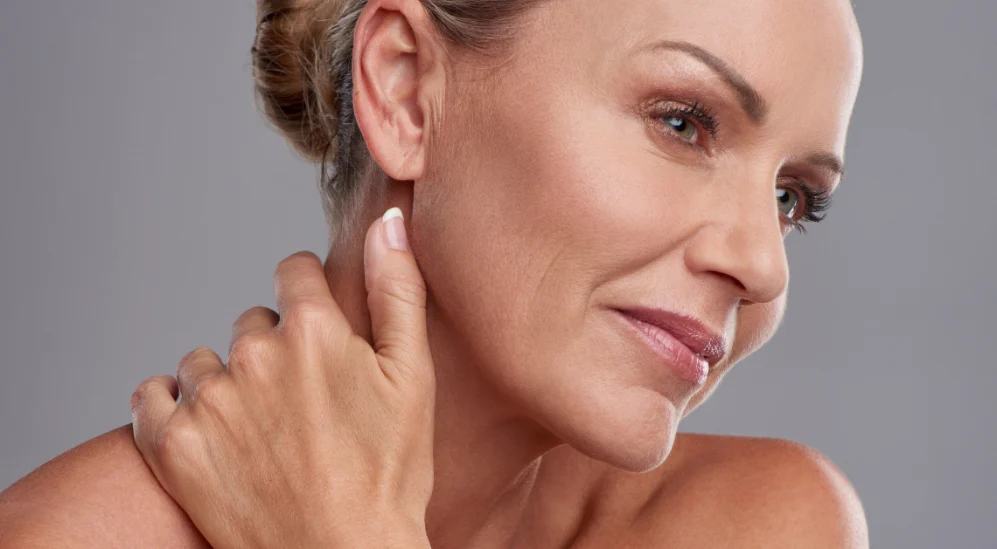
Skin is where GHK-Cu has the most human research, and nearly all of it involves topical products, meaning creams or serums applied to the skin. Copper peptides have been included in skincare for years, and small studies have looked at measures like skin firmness, texture, and the appearance of fine lines.
This leaves room for further research into GHK-Cu peptide benefits for skin, including which formulations might help and how much improvement people might notice.
If skin changes are part of your overall health concerns, it’s worth looking at the bigger picture. Hormone shifts, digestion, sleep, stress, and nutrition can all show up in your skin. A care team that looks at those pieces together may find more useful places to start than a single product.
Interest in GHK-Cu peptide hair growth stems mainly from laboratory and animal research, as well as from topical hair products that include copper peptides. Some of this early research suggests GHK-Cu may affect hair follicles, the tiny structures in the skin that produce hair. While these results are promising, they need to be proven through well-designed human trials.
Hair thinning can have many causes, so it’s important to work with a care team that is able to consider the full picture of your health, including thyroid changes, iron levels, hormonal shifts, and stress.
GHK-Cu has been studied for tissue repair mostly in lab and animal models of wound healing. In these settings, researchers have looked at how it may influence the processes the body uses to rebuild damaged tissue, such as forming new collagen and new small blood vessels. These results are part of why GHK-Cu sometimes appears alongside BPC-157 and TB-500, and GLOW blend in recovery-focused conversations.
GHK-Cu peptide side effects are currently being researched, so human safety research is limited. With topical products, reported concerns are usually mild skin reactions such as redness, itching, or irritation. With injectable forms, researchers are constantly updating their findings so that we can gain a fuller picture of GKH-Cu. When discussing GHK-Cu peptide side effects with a provider, useful questions include:
GHK-Cu is not currently FDA-approved. Copper peptides appear in cosmetic skincare products, but a product sold as a cosmetic is different from a substance approved to treat or prevent a health condition. The rules governing compounded peptides are constantly changing, which is another reason to work with a medical team that stays up to date with current guidance.
At Health for Life Naturopathic Medicine, a conversation about GHK-Cu comes after our team gets to know you, your health history, and what you’re hoping to address. Peptide therapy like GHK-Cu is an option for certain patients. We believe there is no one-size-fits-all approach to health, and we will have an honest conversation with you about your goals and the appropriate treatment options for you.
Your care plan may include lab work, a close look at hormones, digestion, sleep, and stress, and more. If you’re interested in healthy aging and health optimization more broadly, our longevity and health optimization care is a good place to learn how we approach long-term health. Patients come to our Phoenix clinic from across the Valley, including Phoenix and Scottsdale.
If you’re wondering whether GHK-Cu, or a different approach entirely, makes sense for you, we’d love to hear what’s going on. Our collaborative medical team will take the time to understand your history and goals before making any recommendations. Become a patient or call 602-368-9211 to get started.
GHK-Cu peptide used most often in relation to skin, hair, and recovery. It is best known as an ingredient in topical skincare products, where it has been studied for skin appearance. Other uses discussed online, including injectable forms for recovery or hairshould be weighed carefully with a medical provider.
Early studies suggest GHK-Cu may help deliver copper to tissues and may influence processes tied to collagen production and tissue repair. Most of this evidence comes from cells in a lab or from animal studies. How those effects translate to people, and to specific health goals is still being researched.
Copper peptides are most commonly used in skincare products aimed at skin texture and firmness, and small topical studies have explored those areas. The term covers several compounds, with GHK-Cu as the best studied.
No. GHK-Cu is not FDA-approved as a drug to treat, prevent, or cure any condition. Copper peptides are found in cosmetic skincare products, but cosmetics are regulated differently from drugs and are not approved for medical use. Other uses, including injectable forms for recovery or hair, should be considered as a part of a comprehensive treatment plan alongside your medical provider.
They use the same molecule, but they are not interchangeable. A cream mostly stays in the skin’s outer layers, while an injection enters the body differently and can reach tissues in other ways.
You can talk with a naturopathic doctor in Phoenix at Health for Life Naturopathic Medicine, where our collaborative medical team serves patients from Phoenix, Scottsdale, and across the Valley. We start by learning your health history and goals, then discuss whether peptides or other options make sense for you. Become a patient online or call 602-368-9211.
Disclaimer: The information in this blog is for educational purposes only and is not intended as medical advice, diagnosis, or treatment. GHK-Cu is not FDA-approved for human use. Any peptide therapy recommendations at Health for Life Naturopathic Medicine are made based on individual evaluation and clinical judgment. Always consult with a qualified healthcare provider before starting any new treatment protocol.
MD, C. S. (2026). GHK-Cu Side Effects: Complete Safety & Risk Guide. GHK-Cu Side Effects: Complete Safety & Risk Guide. https://ghk-cu.com/side-effects
Maquart, F. X., Bellon, G., Chaqour, B., Wegrowski, J., Patt, L. M., Trachy, R. E., Monboisse, J. C., Chastang, F., Birembaut, P. & Gillery, P. (1993). In vivo stimulation of connective tissue accumulation by the tripeptide-copper complex glycyl-L-histidyl-L-lysine-Cu2+ in rat experimental wounds. J Clin Invest. 1993;92(5):2368–2376. https://doi.org/10.1172/JCI116842
(2026). GHK-Cu: Compound Profile. PepMax Research. https://www.pepmax.bio/research/ghk-cu-compound-profile
Dou, Y., Lee, A., Zhu, L., Morton, J. & Ladiges, W. (2020). The potential of GHK as an anti-aging peptide. Aging Pathobiol Ther. 2020 Mar 27;2(1):58–61. https://doi.org/10.31491/apt.2020.03.014
(2024). GHK-Cu and Copper Peptide Hair Growth: The Research. GHK-Cu and Copper Peptide Hair Growth: The Research. https://ghkcumeds.com/hair-research

Gastrointestinal Health
Gastrointestinal Health